Color is Intoxicating - William Strickland
Series Introduction
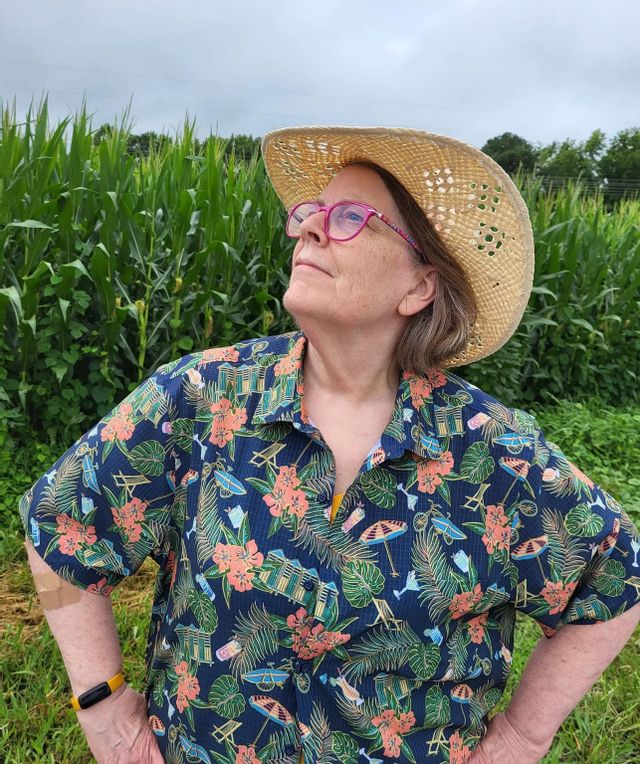
This is the fifth of a 12-part series on community builders who participate in Activate Selma, NC.
The author is Cindy Brookshire, one of the co-founders of Activate Selma.
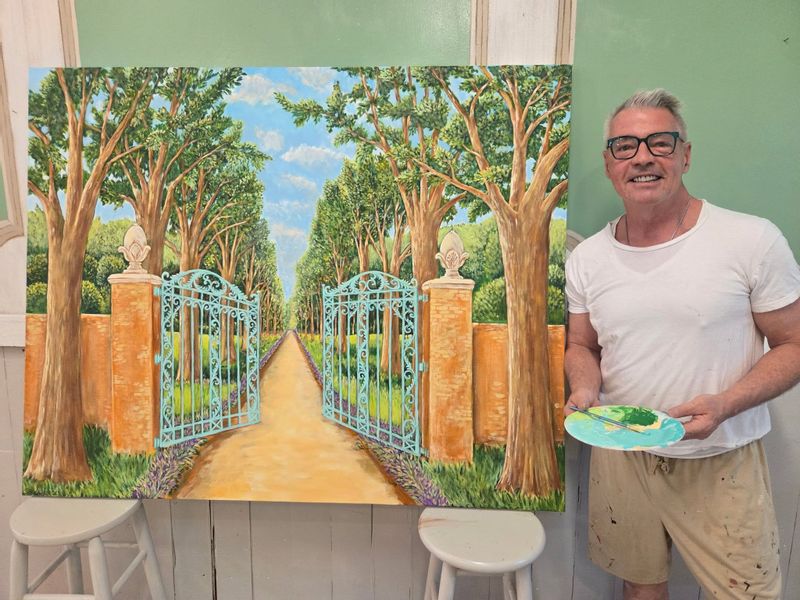
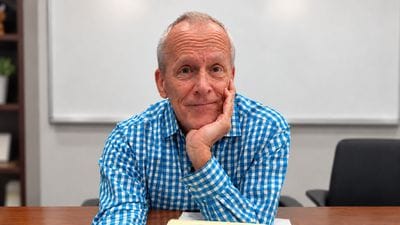
Caption: William Strickland, Selma Artist.
Color is Intoxicating
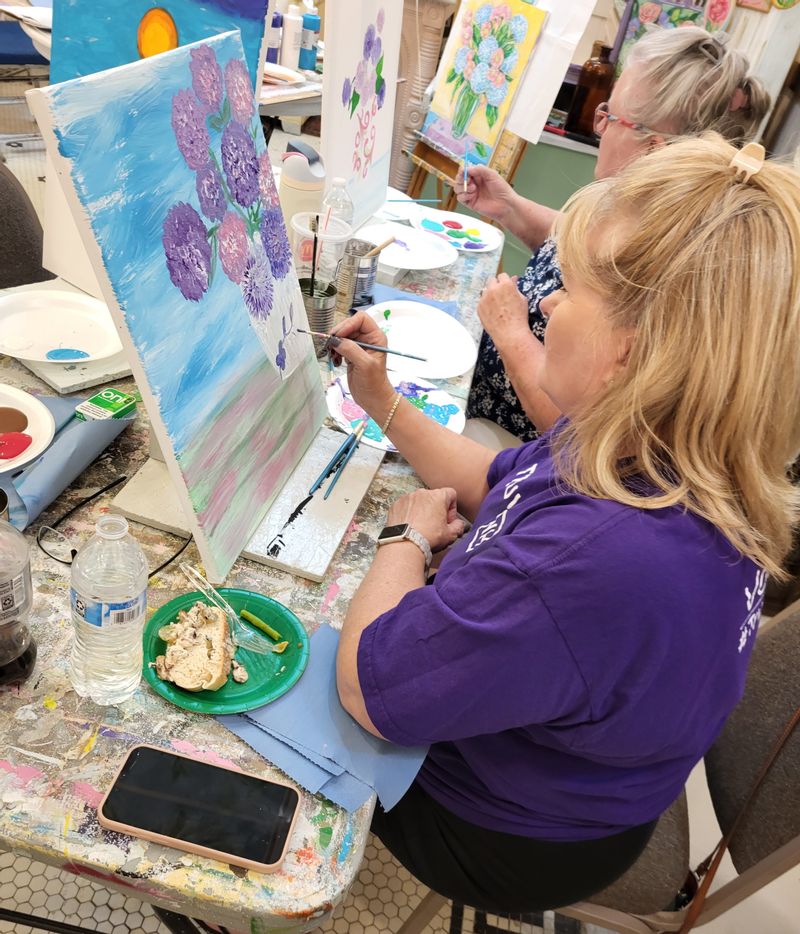
Saturday night on South Raiford Street in downtown Selma, and William Strickland’s Art Gallery is a sanctuary of creativity and color. Soft music plays. A table of culinary delights, including slices of sweet potato pie, give southern sustenance to returning art students Stuart Lee of Smithfield and Mary Hales of Kenly.
This is not a Paint and Sip.
Under William’s gentle guidance they are going beyond copycat canvases to learn that stems don’t resemble straws from the Tastee-Freez, and blossoms don’t line up like bridesmaids for a photo. William hands Mary an extra canvas to “dibble dabble” with for breathing individual life into her bouquet. “See, the dresses are the same, but the bodies aren’t,” he compliments. Even the swirls of her carved vase, he says, remind him of ice skating. “Design elements are what make a Mercedes, a Mercedes, even the tires.”
William’s partner, Jim Strickland, well known among church congregations for his pie making and other culinary delights, is protective of William’s schedule, balancing the demands of the gallery and William’s clients so that the artist has personal time to create. Jim envisions a school of art, where students under William’s tutelage will carry his distinctive style and instruction out into the world, as those influenced by other North Carolina artists have done. William’s work has already garnered many accolades and graces the homes of prominent residents of Central and Eastern North Carolina, as well as corridors of healing at medical facilities, and showrooms of multi-million-dollar businesses like DeWayne’s.
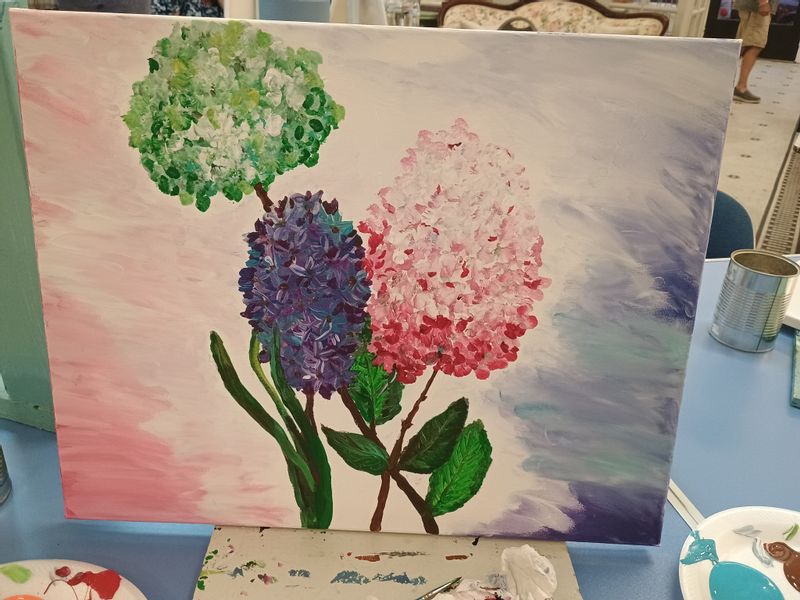
Caption: In the photo above below, Art student Stuart Lee of Smithfield’s work
In the photo below, Art student Mary Hales of Kenly's work
Small Town Beginnings
“Did Jim tell you that? ‘The William Strickland School of Art?’ Oh, that is so funny,” William demurs. “The truth is this is who I am: A rose bush in Selma.”
He grew up in Elm City, North Carolina. “We had big gardens. Mama, Daddy, my grandmother, all did flowers for church. Though I’m adopted, I still claim flowers in my DNA, they are my love legacy.”
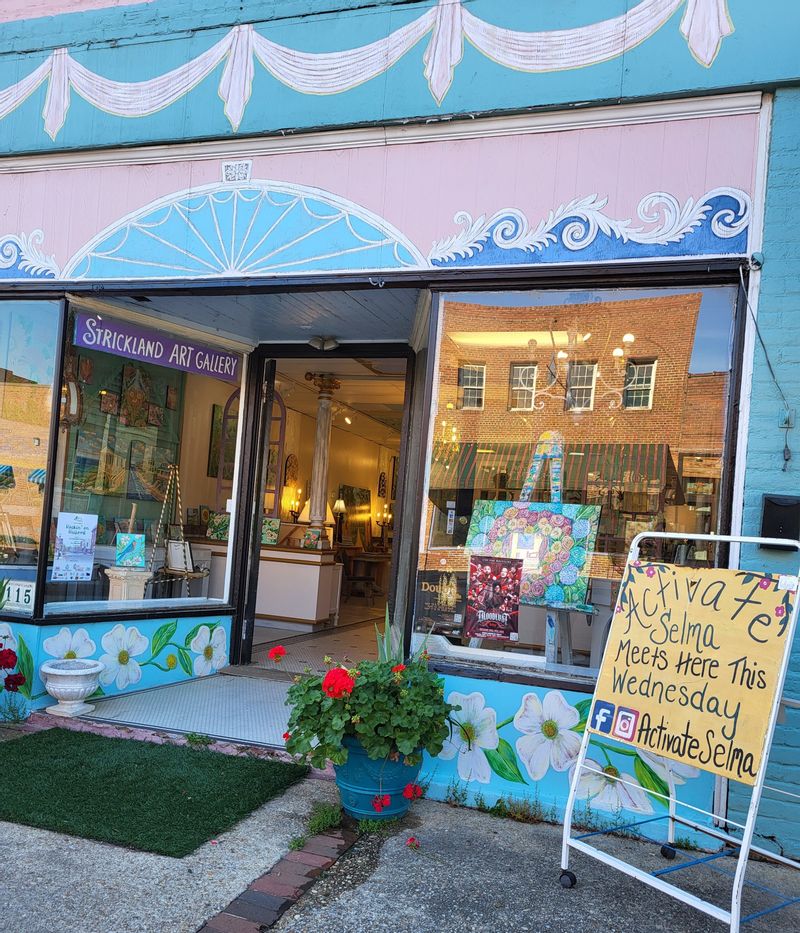
A garden of floral pastels greets the gallery visitor from floor to ceiling, table to mantel, even spilling out onto sidewalk planters and building art – and to other towns, as library murals and stage sets for the Neuse Little Theatre.
“When I was young and saw The Wizard of Oz for the first time, I was blown away by the color,” William says. “I sought out houses that were more flamboyant, bolder in design, and more outrageous. They were so much more exciting to me than builder beige. To me, color is intoxicating.”
When he’s not painting flowers, he paints pastoral and coastal scenes, farmhouses, homes with porches, and country churches.
“The church’s doors are open to us. They’ve seen our tears, heard our prayers, and comfort us, like a grandparent,” he says. “I'm 58 and I still want to go to my grandmother's house. I wish I could smell the clothes on her clothesline and feel the abundance of not gilded things, but things that shine with love and value because they were appreciated. You took care of them because you didn't have so much.”
Missing, however, in any of his work, are people.
“I guess I’ve told myself I can’t paint people so long, I think there’s actually truth to that,” he explains. “So, I encourage other artists to be really careful about what they tell themselves.”
This summer, William hopes to sponsor an art contest for youth in Selma and display their work in the gallery.
“Who else encourages them? Our athletes get confidence from their coaches and teachers and classmates. Who lifts up young artists? We’re told that we’re just dibble dabbling, it's a hobby, it's a selfish indulgence. Did you cut the grass? The grass grows every week and has to be cut again and again and again. But to spend that time painting. That needs to be nurtured.”
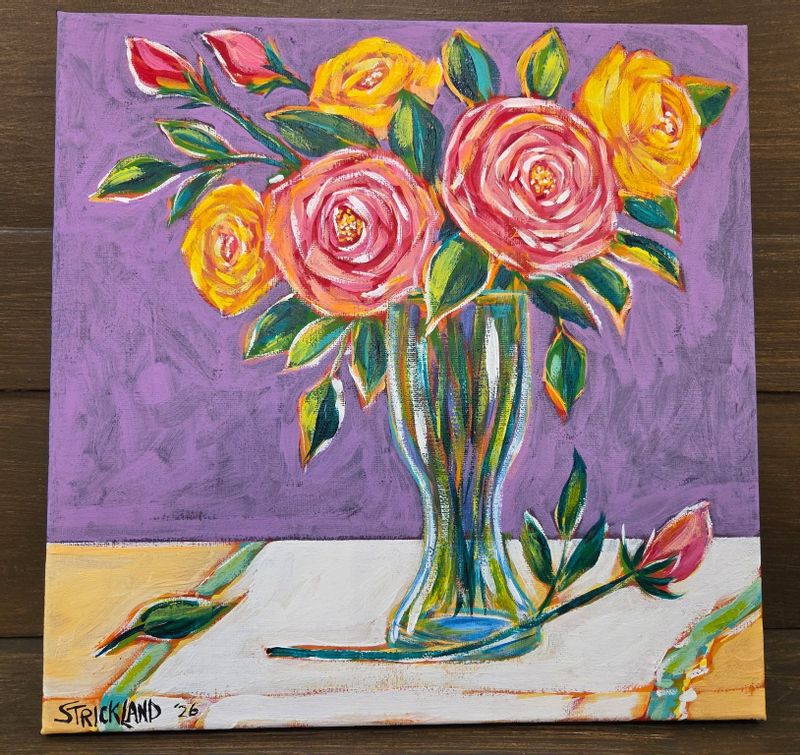
Caption: The above picture is an original painting by William Strickland.
Below is a look at the exterior of William Strickland's Art Gallery at 115 S. Raiford St., Selma, NC 27576
How the Gallery Started
The gallery opening five years ago was, William says, because of God's grace. Jim Strickland coming into his life was the nudge he needed to start signing his artwork “William Strickland” and to see himself as himself, an artist, and not just a wall painter.
William had been in an 18-year committed relationship with Donald Long, who passed away from cancer in 2018. Throughout those years he signed all his artwork at the hospital and DeWayne’s as “W. Strickland Long.”
“Mainly I did walls, but I did canvases, too. My art shows were small, in private homes.”
For the final few years of Donald’s illness, William was his husband’s caregiver, a role many who filled a similar role for their loved one can empathize, depleted him. Journeying through his grief, finding himself again, and opening up to a new relationship with Jim, took time, courage, and faith.
“I could tell Jim was a compassionate, good person,” says William. “He asked me, ‘What makes you happy?’ and I said, ‘When I paint,’ meaning, my own creative work as an artist, not for clients. I can’t remember his exact words, but it was like, ‘Well, that's what you need to do more of,’ because gallery came soon after.”
William’s whole demeanor brightens as he shares this.
“I had been in paint clothes so long, stopping to get gas, and seeing the eyes of people that look at the paint on my hands or my clothes – they're nice people, but they notice that first, not me. I felt more like a hard-working mule,” he adds. “The relationships I have now with the people who love my artwork have made me feel like a beautiful horse. I feel young again. All the brokenness has healed.”
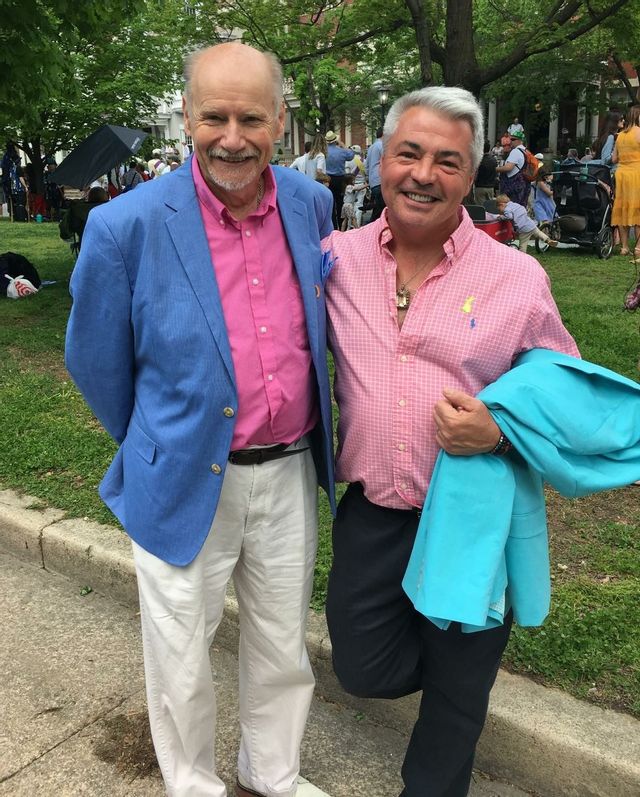
Caption: Partners Jim Strickland (L) and William Strickland (R).
An Authentic Gallery Experience
William opens the doors of the gallery and invites visitors in to immerse themselves in an experience they won’t find anywhere else. There’s no pressure to buy anything – just the suggestion that they think about what they’ve been exposed to in other places: prints that have been duplicated hundreds of times in retail décor shops, or those monitors that mount on the wall and rotate art in medical offices. This gallery is one on one. These acrylic paintings on canvas, you can see the texture up close. This is authentic.
“This gallery is like a garden or a greenhouse, where people can come in to see what's blooming. For some, it can become a church,” he explains. “Sometimes people come in and they're downsizing, getting rid of things that haven't fed them for a while. They need something that is real. They’re going through a divorce, or they’re in transition. They see a painting and that becomes a picture of where they're going to go.”
“I talk with them, take in their stories. They’re sacred. I’m honored. I feel like they should be carried gently on a beautiful silk pillow, because people are going through something. They are trying to find their musical beat again. They’ve been interrupted. They’ve experienced a loss and they're trying to pick up the pieces of their life that will never be the same. Art can heal.”
What Activate Selma Can Do
William at first apologizes. He hasn’t been participating in the group because of all the hours of running the gallery and classes and being an artist producing the artwork. He forgets, however, that he has opened the gallery for Activate Selma’s Wednesday morning meetings, and by hosting Open Mics and other intimate community events that bring life to the downtown area on nights and weekends, he is very much activating the community year-round.
So, he feels comfortable to begin by offering this critique:
“The tsunami of growth is coming, and if we're not careful, it will go around Selma, but not lift us,” he warns.
“I see Activate Selma trying to lift downtown’s awareness of our value and what needs to be protected. In a time of division and uncertainty, Activate Selma brings people together and promotes joy and enthusiasm.”
He is, however, also anxious to see decision-makers hurry up and do what they’ve been talking about for years: Brand Selma, and market the downtown shopping district as a distinct experience. Get a dedicated billboard up on the major roads for at least a year. Put up wayfinding signs for newcomers. Put out sandwich board signs and traffic cones for pedestrian safety as they navigate the sidewalks and crosswalks.
And while murals are great, “they’re everywhere now, and eventually they fade and crack. I think of whirligigs,” he says, his face lighting up. “I think of movement and color. I wish we had strings of lights over our street, and umbrellas hanging from the lights. I wish we had a water feature. We have an abundance of brick and concrete, but we need more softness and color and movement. If we could go into all the empty buildings and white out the windows so they didn’t look so dark and in despair, that would be a visual lift. When you love Selma, as I do, you can look at it in a beautiful way.
“We've all had a spouse that we love, but sometimes we look at them and go ‘Really?’ So, I can also look at Selma on certain days, and I see a lot of old and neglect, and wish we had more robustness, a little bit more turned on.”
William stands on his front sidewalk and counts three vacant buildings and one that needs to be torn down.
“If we have people who love and believe in Selma, who will step up to have the critical debates about the truth of where we are, and do the hard things we need to do, and are ready to put their money out to invest, then we will thrive. If not, then more businesses will move again.”
“It takes professional marketing – and that billboard with that marketing message for one whole year. We need that specialized magic. That is why DeWayne's is a popular place a mile and a half away and still in Selma. It’s not that we don’t have a rose bush in Selma, we’re just not marketing to let people know about downtown Selma.
“In five years, I’ve proven I can run a gallery, and now I know this gallery can be anywhere. I have clients from the coast to Rocky Mount. Where should my shop be? It doesn’t have to be in Selma. That's what Selma has to think about,” says William.
He talks about how, while Johnston is still a rural county, a high percentage of residents – 77 percent or roughly 96,000 people – commute outside for work each day.
“They’re in that urban world four, five days a week,” he says. “And then they return home to this organic place that needs to be protected. This is our canvas, the place we value.”
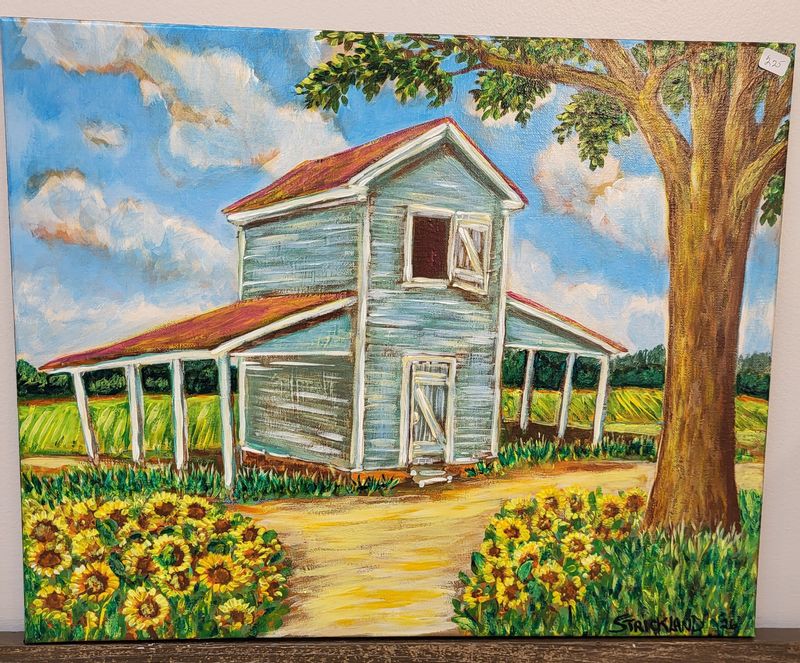
Caption: Original painting by William Strickland
In the meantime, William Strickland continues to lead his monthly art classes, with devoted students like Stuart Lee, Mary Hales, and others.
“Who lifts the mature artist?” he asks, “The one who has raised the family, who put others first, and still their soul, who needs to express what they’ve been through? I’m a bit like Buffy, the Vampire Slayer – helping them create something that can be a gift, which can be a bird that flies away, that contributes, that has value.”
“As artists, young or mature, we are awakening from where we were. We build; we give structure. We put authentic love onto our canvas. We step away; we step back. The painting tells us when to stop. We don’t paint to sell. We paint where our heart is. That’s what connects with the viewer. That’s art.”
If you'd like to see more photos go to https://cindybrookshire.substack.com/
Also by Cindy Brookshire:
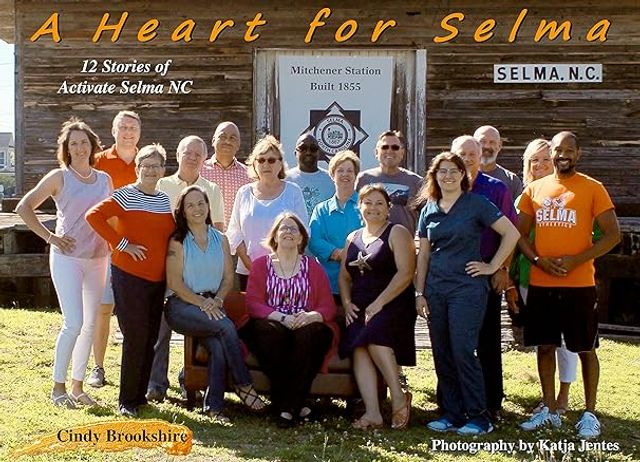
If you'd like to read about the original community builders of Activate Selma, there's a book at Coffee on Raiford you can browse, A Heart for Selma: 12 Stories of Activate Selma, or you can purchase a copy from Amazon.